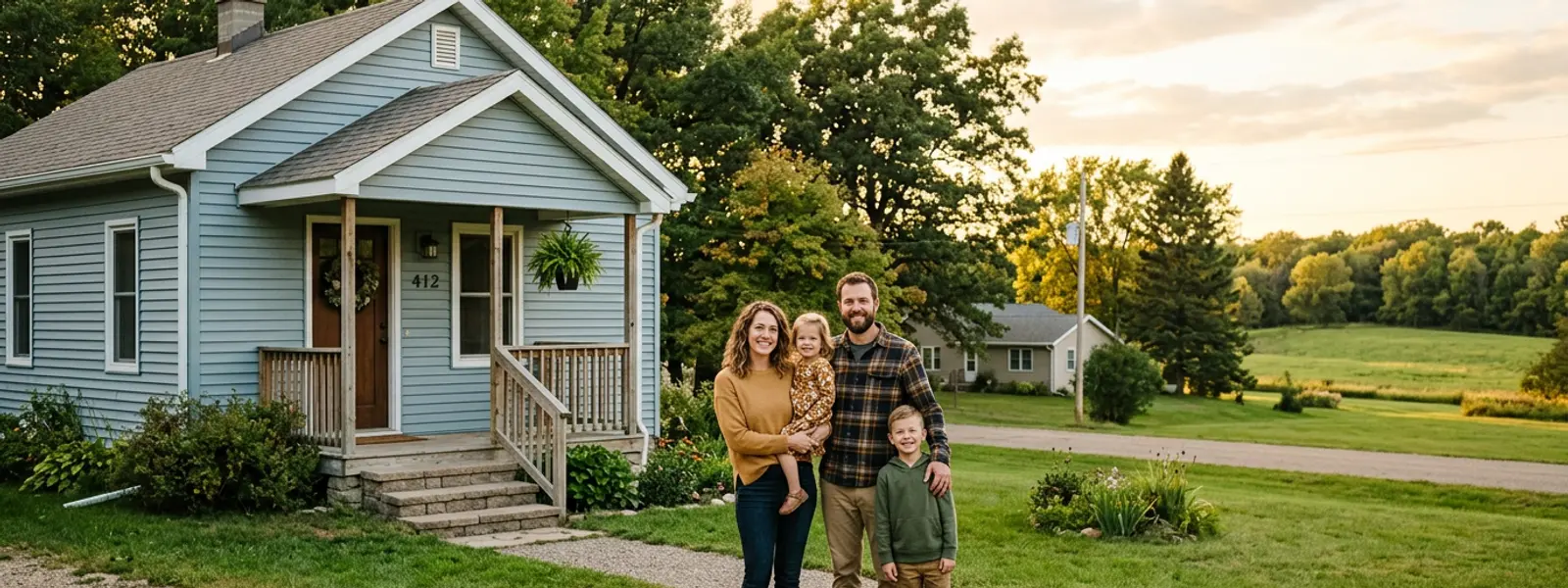
USDA loans are one of the most overlooked paths to homeownership for buyers who want a lower cash-to-close. In 2026, the biggest misconception I hear is that a "USDA loan" is only for farms. In reality, the most common USDA option is a mortgage for an owner-occupied single-family home located in an eligible rural or small-town area. Many Minnesota communities qualify — including areas outside larger hubs where buyers can often find more space and a more affordable payment.
This guide breaks down how USDA eligibility works in plain language, what "0% down" really means, how income limits are tested, and what you can do now to make your application smoother. (And yes — even if you think you "make too much" or your target home "isn’t rural enough," it’s worth checking before you rule it out.)
USDA loan basics: what the program is (and what it’s not)
USDA Rural Development supports several housing programs. For most homebuyers, the relevant option is the Single Family Housing Guaranteed Loan Program (often shortened to "USDA guaranteed"). With a guaranteed loan, you work with an approved lender and USDA provides a guarantee to the lender — which can allow more flexible terms for qualified borrowers.
Two key points for planning:
- USDA loans are for primary residences (owner-occupied).
- Eligibility is not just about your credit score — it’s also about the property address and your total household income.
Step 1: Confirm the property is in an eligible area (address-based)
USDA eligibility is determined by where the home is located — not by whether it feels "rural" to you. The official tool is an online map and address checker commonly referred to as the USDA Eligibility Site.
USDA state pages direct applicants to use an official eligibility Self-Assessment tool at eligibility.sc.egov.usda.gov.
Practical tips when you check an address:
- Check early, before you write an offer. If a home isn’t in an eligible area, a USDA loan won’t work regardless of credit or income.
- If the property is close to the edge of the eligible boundary, ask your lender to verify it again later in the process. Boundaries can be updated.
- Remember: eligibility is address-specific. A town can have eligible and ineligible pockets.
Step 2: Understand USDA income limits (it’s household income, not just borrowers)
USDA loans are designed for low-to-moderate income households. The important detail: USDA income limits usually look at total household income, not only the income of the person(s) on the loan.
USDA’s Rural Development pages advise applicants to use the USDA Eligibility Site to check whether their income is within program limits and whether the home is in an eligible rural area.
What this means in real life:
- If you have a non-borrowing spouse or other adults living in the home, their income may count in the USDA calculation.
- Overtime, bonuses, commission, and some other income types can matter — even if a lender can’t use 100% of it for qualifying.
- Income limits can vary by county and household size, so two families with the same income may not have the same result if they’re buying in different counties.
Step 3: 0% down doesn’t mean $0 to close (plan your cash-to-close)
A USDA loan can allow 0% down payment, which is a big advantage. But you should still plan for closing costs and prepaid items. Typical examples include:
- Lender fees (origination/underwriting/processing, depending on lender)
- Title services and recording fees
- Prepaid homeowners insurance and property taxes (often collected into an escrow account)
- Appraisal (and possibly a credit report fee)
The good news is that many of these costs can sometimes be covered through seller contributions (depending on your offer and the contract), or structured into pricing via lender credits. This is where having a mortgage broker run options is valuable — you can compare different combinations of rate, fees, and cash-to-close.
Step 4: USDA underwriting still applies (credit, DTI, documentation)
A USDA loan isn’t a "no-document" or "automatic approval" mortgage. You’ll still go through standard underwriting. Most borrowers should plan for:
- Verification of employment and income (paystubs, W-2s, sometimes tax returns)
- A review of monthly debts to calculate debt-to-income (DTI)
- An appraisal to confirm value and basic property standards
- Bank statements to confirm funds needed to close (even with 0% down)
If you’re self-employed or have variable income, planning ahead is especially important. We can structure a pre-approval that matches how underwriters will review your file — which reduces surprises later.
Common USDA loan questions (Minnesota edition)
Do I have to buy in the middle of nowhere?
No. Many small towns and outlying communities can qualify. The only reliable way to know is to check the specific address in the official eligibility tool, because boundaries don’t always line up with city limits.
What if my household income is close to the limit?
If you’re near the limit, it’s still worth running the numbers carefully. Household-size adjustments and certain allowed deductions can affect the result in some cases. A good next step is to run a preliminary check in the eligibility tool, then have a lender confirm with documentation.
Can I use a USDA loan for a fixer-upper or acreage?
USDA appraisals focus on basic safety and livability. Minor cosmetic issues are often fine, but major health/safety concerns can be a problem. For acreage, the key idea is that the property should be residential in nature — not set up primarily for income-producing farming operations. When in doubt, send the MLS listing to your lender early so we can flag anything that could raise an underwriting question.
A simple USDA loan checklist (what to do this week)
If you’re thinking a USDA loan might be a fit, here’s a quick plan:
- Pick 3–5 addresses you like and check them in the official eligibility tool.
- Estimate your total household income (everyone living in the home) and compare to county limits.
- Get a pre-approval with documentation so your offer is competitive.
- Plan your cash-to-close (closing costs + prepaid items), even if your down payment is 0%.
Talk to Davis Monroe Financial LLC (Mora, MN)
If you’re shopping in Mora, Pine County, Kanabec County, or anywhere in Greater Minnesota, we can help you confirm USDA eligibility, compare USDA vs. FHA vs. conventional options, and build a plan that fits your budget.
Call Davis Monroe Financial LLC at (320) 200-5126 or visit www.mydmf.com to start a pre-approval.
Sources: USDA Rural Development (state eligibility guidance) https://www.rd.usda.gov/ga ; USDA Eligibility Self-Assessment tool https://eligibility.sc.egov.usda.gov/eligibility/welcomeAction.do?pageAction=assessmentType ; USDA Rural Development program page (eligibility-site reference) https://www.rd.usda.gov/programs-services/single-family-housing-programs/single-family-housing-direct-home-loans-34