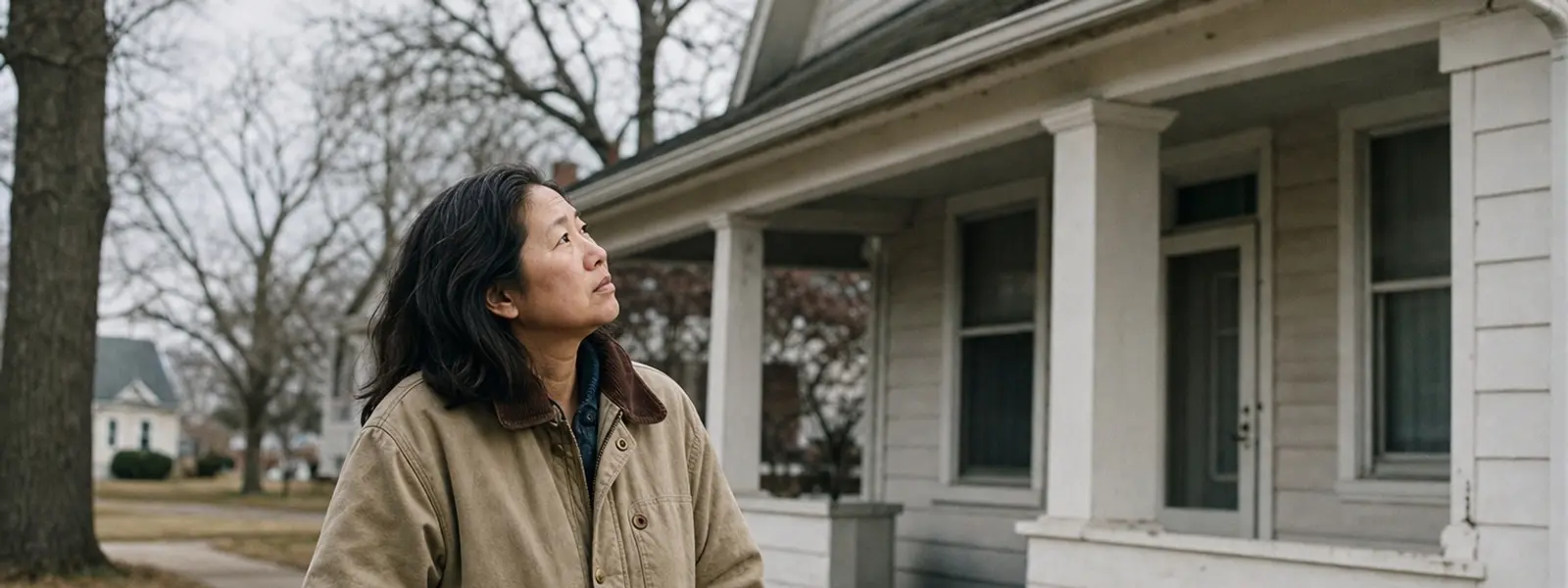
A VA appraisal does two jobs at once. It estimates market value, and it checks the property against VA Minimum Property Requirements, which boil down to three words: safe, structurally sound, sanitary. On a 1920s farmhouse in Kanabec County or a lake place on a private well and a forty-year-old septic system, value is rarely what kills the deal. The MPR side is. Knowing which items actually fail, and inspecting for them before you write an offer, is the difference between a clean closing and a scramble for repairs three weeks in.
What MPRs actually require
MPRs are condition standards, not a home inspection and not a code compliance review. The VA-assigned appraiser is looking for readily observable defects that make the home unsafe, unsanitary, or structurally unsound. The core items:
- A continuous supply of safe, potable water for drinking, cooking, and bathing, from a public system or an acceptable private source.
- A safe and sanitary means of sewage disposal, either public sewer or a functioning private system.
- A permanent heating source capable of maintaining a habitable temperature, which in Minnesota is judged against Minnesota winters, not a national average.
- Working electrical service with no exposed or hazardous wiring, and mechanical systems that appear operational.
- A roof that prevents moisture entry and has remaining serviceable life.
- No readily apparent structural problems: foundation movement, rotted framing, or failing support.
- Accessible attics and crawl spaces, with adequate ventilation, so the appraiser can view them at least from the access point.
- Year-round vehicular access from a public or private all-weather road, with a recorded permanent easement where the access is private.
- Drainage that carries surface water and roof runoff away from the foundation without ponding.
- Enough living space for living, sleeping, cooking, dining, and sanitary facilities.
If any of these fail, the appraisal is completed subject to repair, meaning the item must be corrected and verified before the loan is eligible for VA guaranty.
What changed on May 1, 2026
VA issued Change 46 to the Lender's Handbook, Pamphlet 26-7, on February 27, 2026, removing five requirements from the MPR chapter as superfluous. It applies to appraisals ordered on or after May 1, 2026. The practical effects for older Minnesota property:
- Detached sheds, detached garages, workshops, and other detached non-residential improvements are no longer evaluated for MPR compliance. A collapsing outbuilding that once had to be repaired or removed is now generally noted rather than conditioned, absent a genuine safety hazard.
- Defective paint on a dwelling built in 1978 or later is normally treated as cosmetic. Peeling exterior paint on a 1985 house is no longer an automatic repair condition.
- The lead-based paint presumption for pre-1978 construction now attaches to the dwelling itself rather than to related improvements as well.
- The radon gas topic, which required builder certification of radon-resistant techniques on new construction in certain zones, was removed.
- The requirement for a contractor certification of an oxygen depletion sensor on a non-vented fireplace or space heater was removed, though a genuinely unsafe appliance is still a safety issue.
What did not change is the part that matters most on old Minnesota housing stock. Roof condition, foundation and structural soundness, mechanical systems, potable water, sewage disposal, wood-destroying insect requirements where they apply, and defective paint on pre-1978 dwellings are all still enforced.
Peeling paint on a pre-1978 home
This remains the single most common MPR failure on older properties, and Minnesota has a lot of them. If the dwelling was built before 1978, lead-based paint is presumed, and any defective paint surface, interior or exterior, must be remediated. Defective means chipping, peeling, scaling, or chalking, not simply faded or dated.
Remediation is not a weekend of scraping with a belt sander. Lead-safe practices govern how the surface is prepared and contained, and the appraiser will require verification that the work was completed. On a house with a hundred feet of peeling clapboard, this becomes a real dollar figure and a real schedule problem, especially in Minnesota where exterior paint work is seasonal. A house that fails paint in October may not be repairable until spring, which is a closing date problem, not just a cost problem.
Roof, heat, basement, and crawl space
Roof
The standard is not age, it is condition and remaining serviceable life. Curling shingles, exposed underlayment, active leaks, or visible interior water staining all draw a repair condition. A roof with a few years left that is not leaking usually passes. Ice dam damage at the eaves, common on older Minnesota homes with poor attic insulation, gets attention because it shows moisture entry.
Heating
The home needs a permanent heat source adequate for the climate. A wood stove or a fireplace insert as the sole heat source is a recurring issue on cabins and rural properties, and it generally is not sufficient on its own. Older boilers, floor furnaces, and gravity systems are judged on whether they operate safely and heat the home, and a red-tagged appliance will stop the file.
Basement moisture
Standing water, active seepage, efflorescence with staining, or visible mold growth on a foundation wall are all reportable. Minnesota basements in older homes frequently show historical moisture, and the distinction the appraiser is drawing is between old staining with a corrected cause and an active problem. A sump pump that is present and functioning helps that argument considerably.
Crawl space and attic access
Both must be accessible. A crawl space sealed behind a fastened panel, or an attic with no hatch, will generate a condition simply because the appraiser cannot observe it. Crawl spaces need adequate ventilation and no standing water. Clearing a path to the access point before the appraisal is free and prevents a repeat trip.
Private wells: what Minnesota buyers should expect
Rural Minnesota properties routinely run on private wells, and VA has a specific protocol here.
- The water must be potable and meet the standard set by the local health authority. Where the local authority has no standard, the state standard applies. Where the state has none, the EPA standard applies.
- Testing must be performed by a disinterested third party: a local health authority, a commercial laboratory, a licensed sanitary engineer, or another party acceptable to the local health authority.
- The buyer, seller, agent, or any other interested party may not collect or transport the sample. This is not a formality and a self-collected sample will be rejected.
- For VA purposes, the test is valid for 90 days from the certification date. A test that ages out during a delayed closing has to be redone.
- A shared well serving two or more properties needs a well-sharing agreement, typically recorded and binding on successive owners, plus evidence the well can serve all connected properties simultaneously with adequate quantity and quality.
Separately from VA, Minnesota law requires the seller to disclose in writing the number, location, and status of all known wells on the property before signing a purchase agreement, and to provide a well disclosure certificate at closing showing each well as in use, not in use, or sealed. Unsealed abandoned wells are common on older farm parcels and are exactly the kind of item that surfaces late. Ask about them early.
Septic systems
VA requires a sewage disposal system that functions and is sanitary, with no effluent surfacing and no backup into the home. Minnesota adds a layer on top of that. Many Minnesota counties, including a number in the central and lakes regions, require a certificate of compliance from an MPCA-licensed inspector before title transfers on a property served by a subsurface sewage treatment system. Requirements are set county by county, so verify with the county environmental services office for the specific parcel rather than assuming.
Two timing traps. Frozen ground and deep snow can make a compliance inspection difficult or impossible for months, and a system found non-compliant may need replacement, which is both expensive and seasonally constrained. If you are writing a winter offer on a rural property, address septic inspection timing in the purchase agreement rather than leaving it to be discovered in underwriting.
Wood-destroying insects
VA requires a wood-destroying insect report on existing homes in designated infestation areas. Minnesota is not in that category, so a report is discretionary here and is generally triggered only when the appraiser observes evidence of infestation or damage. Carpenter ants and wood rot are the more likely findings in Minnesota than termites, and either can produce a repair condition if structural members are involved.
Tidewater and the Notice of Value
These are two different documents at two different moments, and buyers routinely confuse them.
Tidewater applies to value, not condition. When the VA appraiser concludes the value is likely to come in below the contract price, they must notify the point of contact before finalizing the report. That party has two business days to submit additional comparable sales and market data for consideration. It is a chance to influence the outcome with data before a low value becomes official, and it is easy to waste by not responding fast. If your file is likely to be tight on value, make sure the listing agent knows in advance that a two-day window may open with no warning.
The Notice of Value is the formal output. It states the reasonable value and lists every condition that must be satisfied before the loan is eligible for VA guaranty, including required repairs and any required inspections. It also makes clear that the appraisal is not a home inspection, and it recommends the buyer obtain one. Conditions on the NOV are not negotiable with the appraiser. They are completed and verified, usually by a compliance inspection after the work is done. If the value itself is the problem after the NOV issues, the remaining path is a reconsideration of value supported by better comparable sales.
Who pays for repairs
This used to be a hard constraint that pushed costs onto sellers. As of a VA circular issued in June 2022, veterans may be charged for the wood-destroying pest inspection fee when the Notice of Value requires it, and veterans may also pay for repairs needed to comply with MPRs. VA encourages negotiating those costs with the seller, and an itemized invoice identifying the veteran and the property is required to document the cost.
In practice that means the repair conversation is a negotiation like any other. The seller may agree, the buyer may pay, or the parties may split it. What does not change is that the work generally has to be complete and verified before closing, so whoever pays, someone has to schedule a contractor inside your timeline.
What to check before you write the offer
On an older or rural Minnesota property, spend an hour on this list before the purchase agreement is signed.
- Confirm the year built. Pre-1978 puts defective paint, interior and exterior, squarely in scope.
- Walk the exterior and look at paint condition on siding, soffits, window trim, and porch rails. This is where the money is.
- Look at the roof from the ground on all sides, and look at ceilings inside for staining.
- Ask what heats the home in January, and whether that source is permanent and primary.
- Ask whether the property is on a private well and whether there are any additional or abandoned wells on the parcel. Request the seller's well disclosure early.
- Ask whether the property is on a septic system, when it was last pumped and inspected, and whether the county requires a compliance certificate at transfer.
- Confirm the access road is all-weather and that any private access has a recorded easement.
- Check that the crawl space and attic have usable access and that they are not blocked by storage.
- Order an independent home inspection regardless. MPRs are a floor for safety and soundness, not an assessment of what the house will cost you to own.
Your next step
If you are shopping with a VA loan in central or rural Minnesota, build appraisal and inspection timing into the offer rather than treating it as paperwork that happens later. Ask for the seller's well disclosure and any septic compliance records before you go under contract, and get a contingency window wide enough to survive a lab turnaround and a repair. Davis Monroe Financial LLC works with Minnesota buyers on VA files, and on older or rural property the condition questions are worth raising before the offer, not after the Notice of Value.